
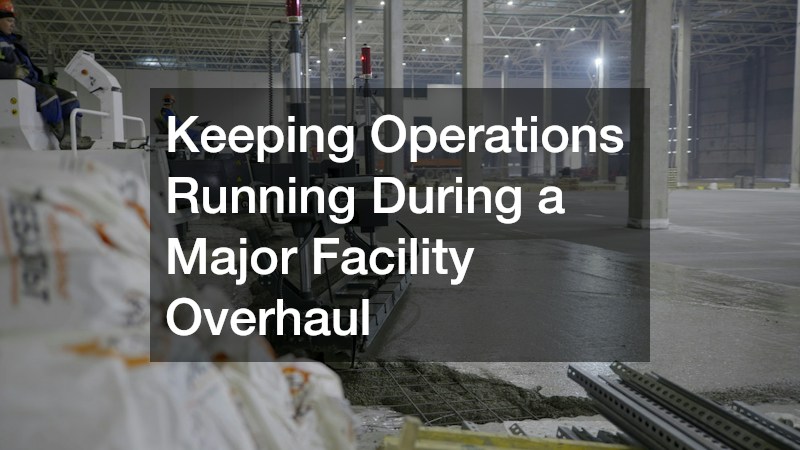
A major facility overhaul can feel like a ticking clock against your bottom line, with every day of disruption translating into lost revenue, frustrated customers, and stressed employees. The good news is that businesses renovate, expand, and relocate successfully every day without grinding operations to a halt. The key is planning each phase of the transition with the same rigor you’d apply to the renovation itself.
This guide walks through the practical steps that keep your business functioning while contractors, equipment, and crews take over your space.
Build a Phased Construction Timeline
The single biggest driver of operational chaos during a renovation is trying to do everything at once. Breaking the project into phases allows you to keep part of the facility operational while another section is under construction. A phased approach also gives your team time to adjust workflows gradually rather than facing a sudden, total shutdown.
Work closely with your contractor to map out which zones will be affected and when, then cross-reference that schedule against your busiest operational periods. If possible, schedule the most disruptive work during historically slower seasons or off-hours. This reduces the chance that a critical system goes offline exactly when you need it most.
- Request a week-by-week construction schedule, not just a start and end date
- Identify which departments or functions must stay fully operational throughout
- Build in buffer days for inspections, material delays, and permit holdups
- Communicate phase changes to staff at least two weeks in advance
Set Up a Temporary Workspace or Satellite Location
When a renovation touches your primary workspace, relocating staff and equipment to a temporary setup is often the simplest way to maintain productivity. This could mean leasing a nearby office suite, setting up a modular trailer on-site, or shifting some employees to remote work for the duration of the project. The goal is to minimize the number of people and processes directly affected by construction noise, dust, and access restrictions.
Relocating even part of an operation involves moving furniture, files, inventory, and sensitive equipment, which is where experienced logistics support becomes valuable. Many businesses bring in commercial movers to handle the heavy lifting, disassembly, and reassembly of workstations so that internal staff can stay focused on daily operations instead of packing boxes. A professional crew familiar with commercial transitions can also help protect equipment warranties by following proper handling procedures.
- Choose a temporary location close enough to retain client and employee access
- Inventory equipment before the move to track what gets relocated
- Label everything by department to speed up setup at the new site
- Confirm internet and phone service are active before moving day
Maintain Utility and Plumbing Continuity
Construction crews frequently need to temporarily shut off water, electricity, or gas lines, which can catch facility managers off guard if they’re not planned for in advance. Before any utility work begins, confirm exactly which systems will be affected and for how long, then communicate those windows to everyone who relies on them. A restaurant, salon, or medical office, for example, cannot function without reliable water access even for a single afternoon.
Underground and wastewater systems deserve particular attention during a major overhaul, since excavation work can sometimes disturb or expose existing lines. If your facility relies on an on-site septic system rather than municipal sewer, it’s worth scheduling commercial septic system pumping before heavy construction activity begins nearby, reducing the risk of backups or overflow caused by vibration, added load, or accidental damage. Catching this ahead of time is far cheaper than an emergency service call mid-renovation.
- Ask contractors for a written utility shutoff schedule
- Install temporary water or power sources for critical functions if needed
- Inspect septic or sewer lines before excavation begins nearby
- Keep an emergency plumber or utility contact on speed dial during construction
Protect Inventory and Equipment From Construction Hazards
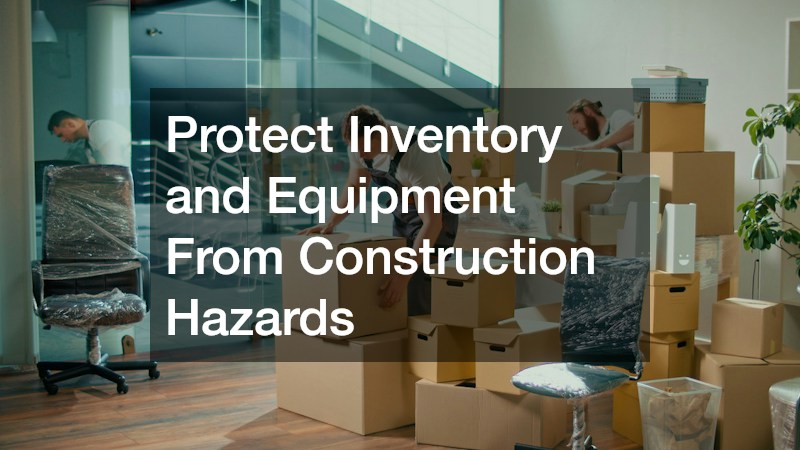
Dust, debris, and vibration from construction work can damage sensitive inventory, electronics, and machinery if it isn’t properly shielded. Even equipment that isn’t directly in the construction zone can suffer from airborne particulates settling into vents, motors, or storage areas. Taking preventive steps now is far less expensive than replacing damaged stock or recalibrating machinery later.
Physical barriers, climate-controlled storage, and clear separation between work zones and operational areas all reduce risk significantly. It also helps to walk the site regularly with your contractor to catch problems like dust leaking through a poorly sealed doorway before it becomes a bigger issue. Regular communication keeps small hazards from turning into costly setbacks.
- Use plastic sheeting or temporary walls to seal off active work zones
- Cover sensitive equipment with dust-proof tarps when not in use
- Store perishable or high-value inventory off-site if space allows
- Schedule regular walkthroughs to inspect for new hazards
Communicate Changes to Customers and Employees
Even the best-planned overhaul will cause some disruption, and how you communicate that disruption matters almost as much as how you manage it internally. Customers who understand why a location looks different or why hours have shifted are far more forgiving than those left guessing. Employees, too, perform better when they know what to expect and why changes are happening.
Consistent, proactive updates build trust during an otherwise unpredictable period. Consider multiple channels so the message reaches people who may not check every platform. A little transparency goes a long way toward preserving customer loyalty and staff morale through a lengthy project.
- Post updates on your website, social media, and in-store signage
- Send email or text alerts for significant schedule changes
- Train front-line staff to answer common renovation-related questions
- Offer small incentives or apologies for major inconveniences when appropriate
Conclusion
A facility overhaul doesn’t have to mean halting business as usual if you plan each phase with intention and communicate clearly along the way. Start by mapping your construction timeline, securing temporary space, and protecting your utilities and inventory before the first wall comes down. The businesses that come out ahead are the ones that treat continuity planning as seriously as the renovation itself. Taking these steps now will help you keep customers happy, employees productive, and operations steady from the first day of construction to the last.